Academic English – A solid stepping stone for an international educational environment
In the context of international education that is constantly integrating and developing, Academic English (EAP – English for Academic Purposes) plays a key role in building a solid foundation of knowledge and English skills for students to confidently enter an international standard learning environment.

1. Definition of English for Academic Purposes (EAP)
English for Academic Purposes (EAP) is a specialized branch of English that focuses on language skills used in academic and research environments. EAP not only helps learners understand and use English in academic documents and specialized texts, but also trains them in critical thinking, analysis and presentation of content in a coherent and accurate manner.
2. Differences between Academic English and Conversational English
In general, Academic English and Conversational English have clear differences in many aspects such as purpose of use, vocabulary, grammar, style, etc. Below is a detailed comparison table

3. Key Skills in Academic English
a. Writing
Academic Writing is the core and most complex skill in EAP, requiring writers to express ideas clearly, logically and in a well-structured manner. This includes presenting arguments based on reputable sources, using specialized terminology and complex sentence structures. In addition, writers must adhere to the rules of formatting, writing layout, citing documents accurately and avoiding plagiarism.
b. Reading
Reading in an academic environment is not simply skimming through information, but a process of deep analytical thinking. When approaching a research paper or specialized document, learners need to know how to identify the main argument and evaluate the reliability of the source. This is an important skill that helps students process a large amount of knowledge selectively and effectively, especially when preparing for an academic paper or group discussion.
c. Listening
To keep up with lectures in an international educational environment, learners need to practice strategic listening skills – focusing on selective listening, identifying main ideas and taking quick notes. This helps students keep up with lectures and gain a deep understanding of the content.
d. Communication
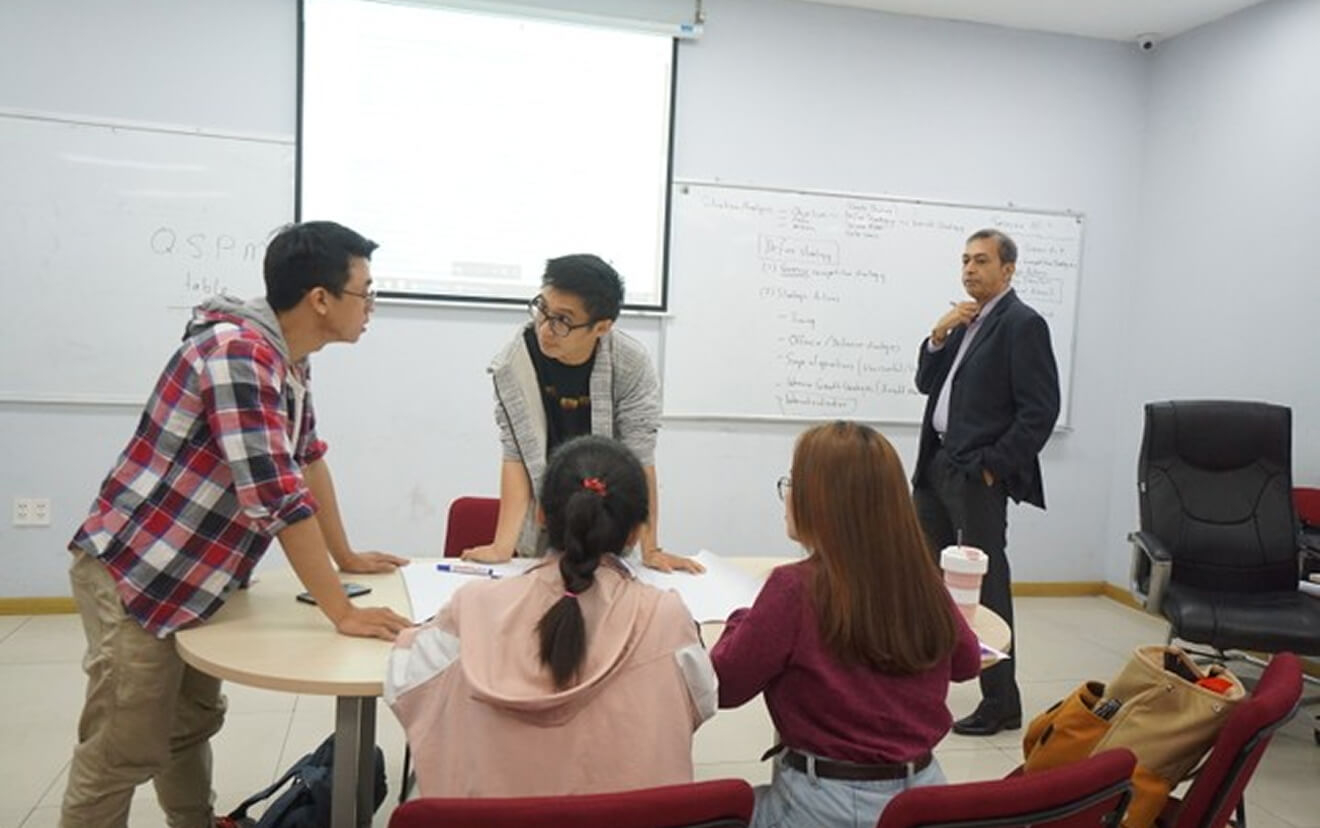
Unlike everyday communication, speaking in academics requires clarity, logic and a high level of organization. When participating in group discussions, defending ideas or presenting in front of the class, learners not only need to present coherently, but also need to know how to use appropriate academic language and respond flexibly to other opinions.
e. Research
Research Skills include searching, evaluating and synthesizing information from many different sources, such as reports, scientific research, specialized books, etc. Students need to know how to use search engines, select reputable sources and cite sources accurately. This skill supports the building of a solid knowledge base and the development of quality research works.
f. Critical thinking
Critical thinking is the ability to evaluate evidence, reason logically, and draw conclusions based on objective analysis. Students need to develop this skill to not only passively absorb knowledge, but also to question, debate, and contribute to the development of their field of study.
Combining and developing the above skills evenly will help students be more confident and successful when entering the international academic environment.
Summary
Proficiency in academic English not only helps students achieve English certificates such as IELTS, PTE or TOEFL, but is also a useful asset for the learning process at international universities. Moreover, academic English skills also help learners access global knowledge, develop thinking and create a competitive advantage in the future career environment.
EduFin Learning Center’s Academic Success English Program
The Academic Success English Program equips students with the necessary English knowledge and skills for studying abroad and studying in a university environment. In addition to building a solid English foundation through improving grammar and vocabulary, students also develop important academic skills such as essay writing, report writing, research, presentation, critical thinking, etc.
If you are planning to enter an international educational environment, register for the Academic Success English course at EduFin Learning Center now.
Link to register for consultation: https://learningcenter.edufin.vn/thong-tin-hoc-vien/
Other articles
What English proficiency and certificates are required to study in Australia?


Study abroad loan: I choose to pay part of my study abroad loan in installments ISB – WSU